Liar's Dice
Classic · two to six players
Everybody is lying. Somebody is lying badly.
Ready to play now.
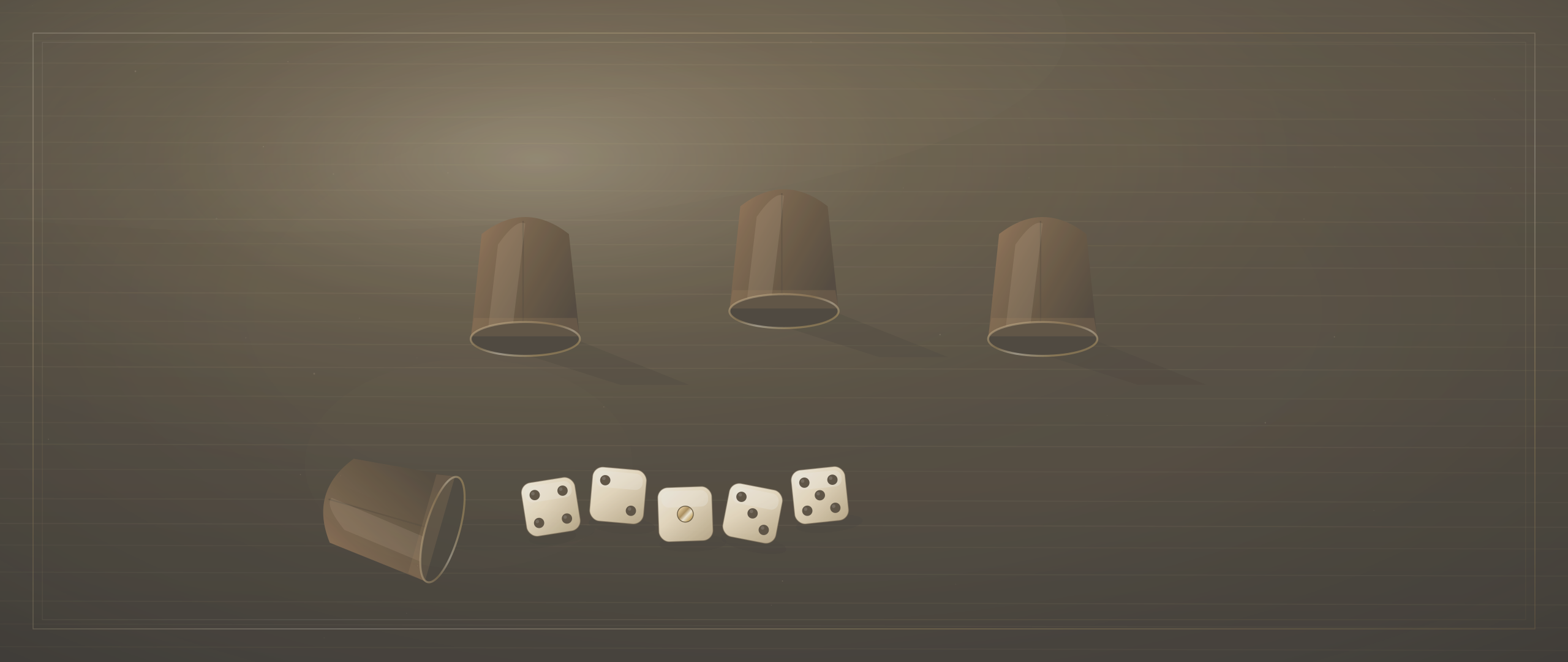
A demonstration of Liar's Dice, played by the computer against itself.
Liar's Dice — playing itself
Ways to play
Alone, against the computer
Your own pace, no arranging anything. Take a move back whenever you like.
Play alone5 opponents, weakest first
- TrustingSays one die more than its own cup shows and no more, and stops the table the moment the bid runs past it — or past two thirds of the dice. It argues, and it is wrong about two arguments in three: the dice it cannot see are worth nothing to it.
- ImpulsiveCan work the odds out — and nearly half the time it works them out, sees they are against the bid, and says something anyway.
- ImpatientThe same, with most of the self-control back. It will still talk itself into one bid in six that it knows better than to make.
- CountingNo lapses at all. It says only what its own cup can back, it believes you are holding some of whatever you just named, and it calls the moment the odds are against you.
- UnreadableDeals itself the cups it cannot see thirty-two times over and plays the round out before it speaks — and, now that it can see which lies survive, it has started telling them.
Together, in the same room
2–6 players. One device goes round the table, or everybody plays off the same screen.
Play in the same roomOnline, at a table
A room code, joinable from anywhere. Pause tonight and pick it up next week from your device.
Play online
About
Five dice each, thrown under a cup, and a bid that can only go up: more dice, or the same number of a higher face. Ones are wild and nobody bids them, so every die you cannot see matches at exactly one in three — and the only way to find out is to stop the table and say it is not there. Lose that argument and lose a die. You can be out before the end.
How it feels
- Brisk
- Nervy
- Everybody watching your face
What the design is for
Ones are wild, and nobody bids them
The simplest rule in the family, and the one that makes the odds a single number: any die you cannot see matches the bid at exactly one in three, whatever face was named and however many of you there are. No doubling, no half quantities, no rounding.
Your cup is the only one you can see into
Your five are face up in front of you. Everybody else is a leather cup with a number on the felt beside it. Nobody else’s faces are in what your screen was handed, so nothing on it can leak them — not greyed out, not in the markup, not there at all.
A challenge turns the whole table over
Call a bid and every cup comes up at once. Those dice are public from then on and stay in the ledger beside the board, so “how many fours have actually been under that cup tonight” is a question you can answer.
Two to six, and you can be out before the end
Every round costs somebody exactly one die, and a seat with none is out and watching. The last person still holding any wins — so at a long table expect to spend some of the evening as an audience.
Five opponents, none of which searches
There is no tree here worth searching — the branching factor is a hundred and fifty and the thing you would be searching is somebody’s nerve. They are told apart by whether they can count, how often they talk themselves into a bid they know better than to make, and whether they have dealt themselves your cup a few dozen times before speaking. Every rung was played against the one below it, four hundred games with the seats swapped, before any of them was named.
Taught by playing
Five steps: read your own dice, raise a bid the smallest way there is, count your wilds in, and call something you can prove cannot be true.
- Best at
- 4
- Kind
- Classic
- Table
- Competitive
- Studio
- Classic — traditional
The opponents
Trusting
Says one die more than its own cup shows and no more, and stops the table the moment the bid runs past it — or past two thirds of the dice. It argues, and it is wrong about two arguments in three: the dice it cannot see are worth nothing to it.
Impulsive
Can work the odds out — and nearly half the time it works them out, sees they are against the bid, and says something anyway.
Impatient
The same, with most of the self-control back. It will still talk itself into one bid in six that it knows better than to make.
Counting
No lapses at all. It says only what its own cup can back, it believes you are holding some of whatever you just named, and it calls the moment the odds are against you.
Unreadable
Deals itself the cups it cannot see thirty-two times over and plays the round out before it speaks — and, now that it can see which lies survive, it has started telling them.
Achievements
0 of 6 earned
Last One Holding
Win a match of Liar’s Dice.
Not There
Call a bid and be right.
Out of Thin Air
Win a match having had a bid stand on a face you held none of.
Not a Die
Win a match without losing a single die.
Down to One
Win a match after being down to your last die.
The Long Table
Win a match at a table of six.
Key art
Key art — Board.game art system
More like this
 Classics
Classic · two players
Backgammon
Luck, handled well.
2 players15–40 minCompetitive
Playable Classics
Classic · two players
Four in a Row
Four in a line. Any line.
2 players5–10 minCompetitive
Playable Classics
Classic · two players
Draughts
Get to the other side.
2 players10–30 minCompetitive
Playable Classics
Classic · two players
Reversi
Nothing is taken. Everything changes sides.
2 players15–25 minCompetitive
Playable Classics
Classic · two players
Oware
Forty-eight seeds, and none of them are yours.
2 players10–25 minCompetitive
Playable Classics
Classic · four players
Hearts
The only game where you spend the evening trying not to win.
4 players15–35 minCompetitive
Playable Classics
Classic · two players
Nine Men's Morris
Older than most of the board.
2 players10–20 minCompetitive
Playable Classics
Classic · two players
Hex
Join your two sides. That is the entire rulebook.
2 players10–30 minCompetitive
Playable